How To's
Step-by-step guides for diagnosing and fixing whatever is wrong with your roses. Spot the symptom on the plant, match it to the disease, pest, or care problem below, and follow the treatment steps.
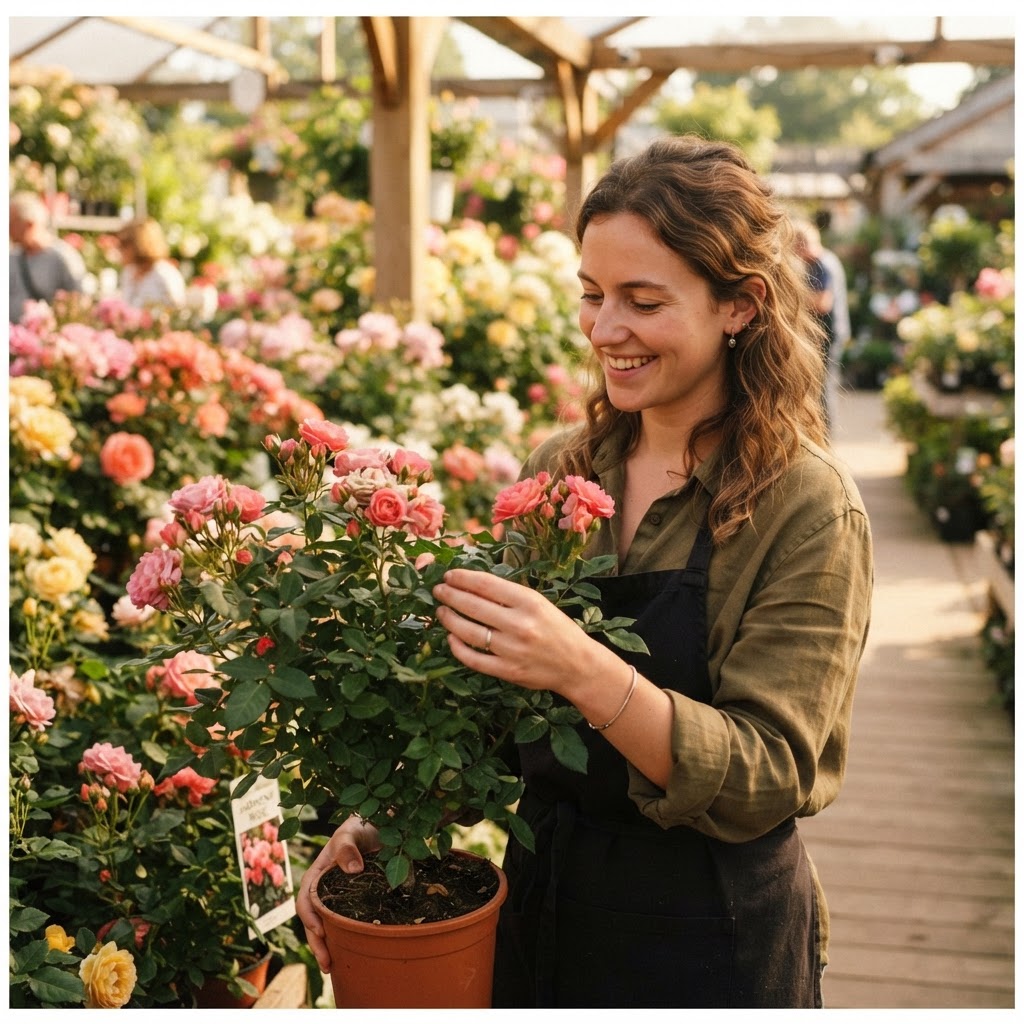
How to Choose Your First Rose: A Beginner's Guide to Easy, Disease-Resistant Roses
To choose your first rose, pick a repeat-blooming shrub, floribunda or polyantha rose that is rated hardy for your USDA zone, sold on its own roots if you live in a cold climate, and proven disease resistant in no-spray trials such as Earth-Kind, ADR or AGRS. Plant it where it gets at least six hours of direct sun. Choose color and fragrance last, from the shortlist that passes those tests.
Read the guide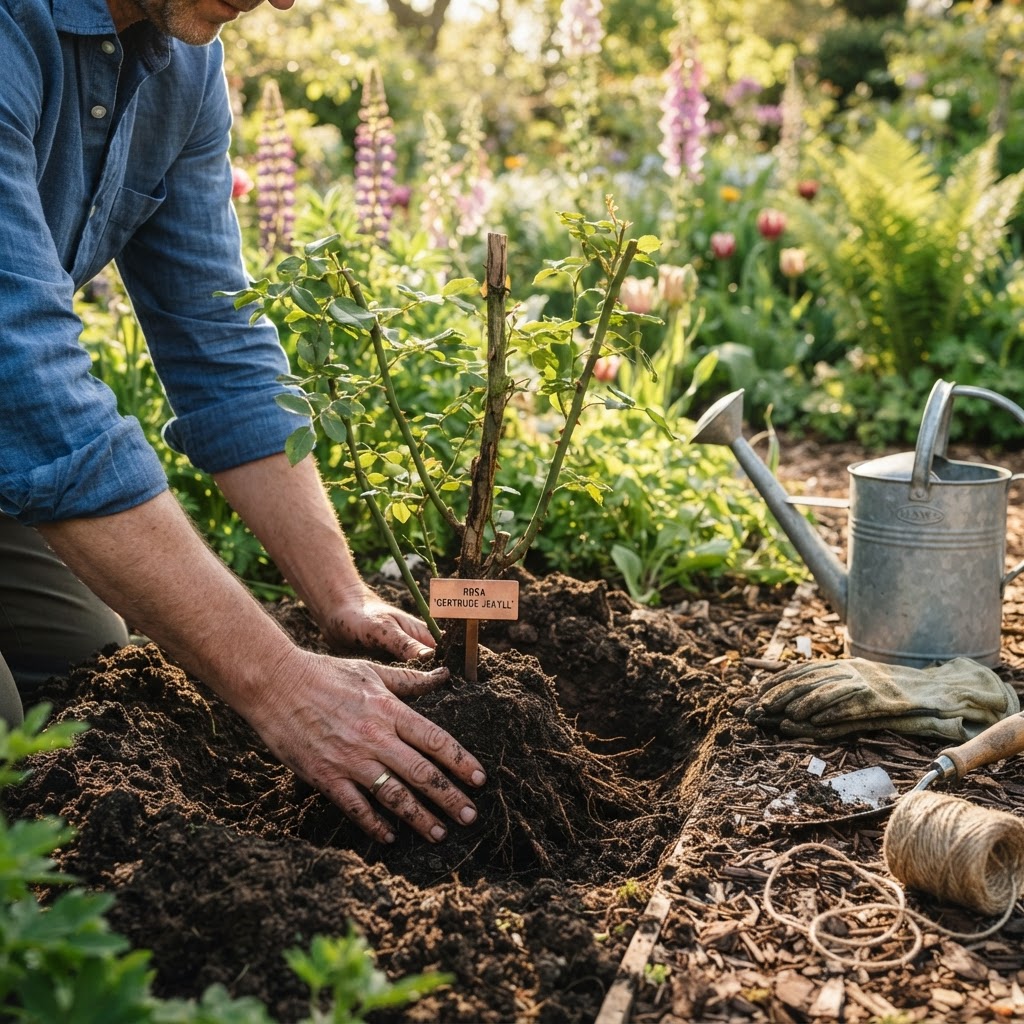
How to Plant Roses for Beginners: A Step-by-Step Guide
Planting a rose comes down to four early decisions: pick a spot with at least 6 hours of sun and good drainage, choose a variety hardy in your zone, amend the soil with compost, and plant at the right time for your rose type. Do those four things well and the rest is routine care — deep watering, mulching, and a light feeding schedule.
Read the guide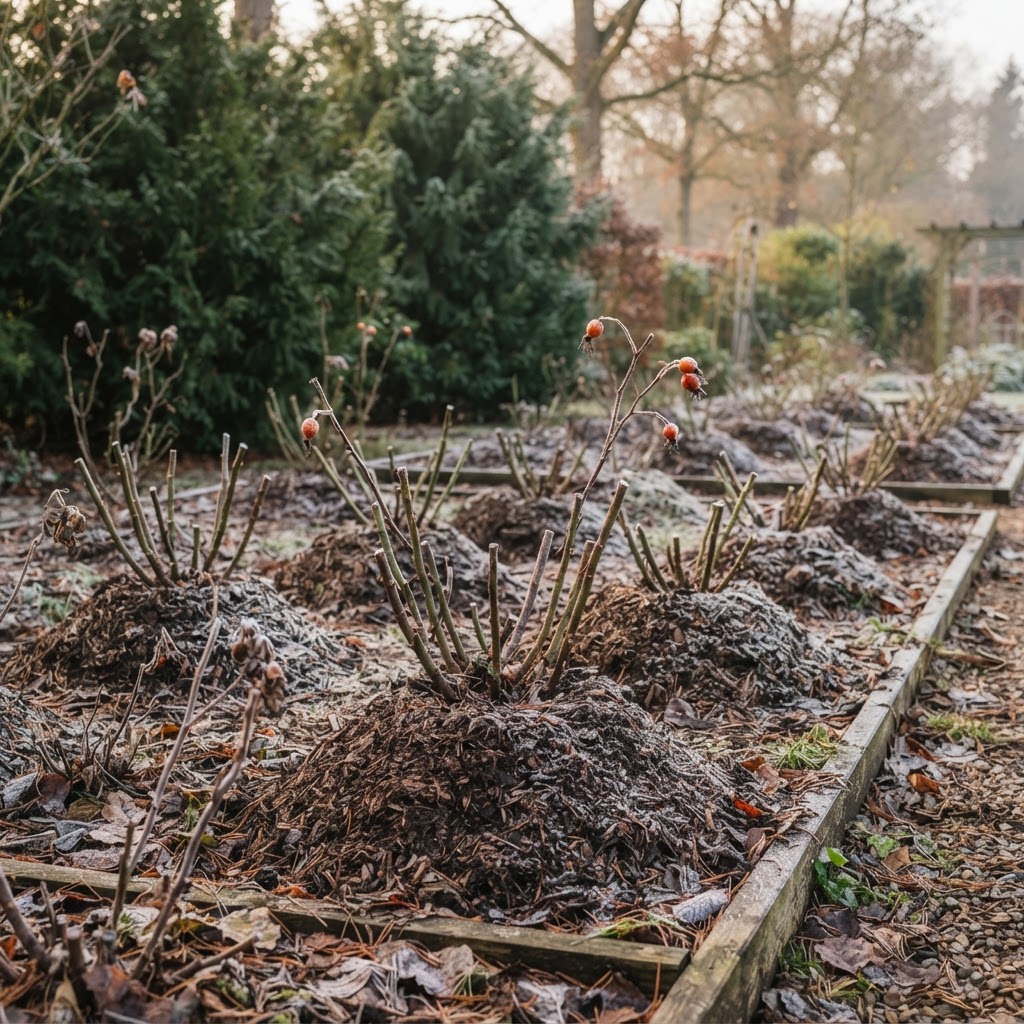
How to Overwinter Roses: Zone-by-Zone Winter Care Guide
How much protection a rose needs depends almost entirely on your USDA zone and whether the rose is grafted. Zones 9 and warmer need nothing at all. Zones 7 and 8 need a clean bed and a light mulch. Zones 5 and 6 need a 10 to 12 inch mound over the crown once the ground starts to freeze. Zones 3 and 4 need that mound plus cone or burlap coverage, and even then some tip dieback is normal. Find your zone, match it to your rose, and the job mostly plans itself.
Read the guide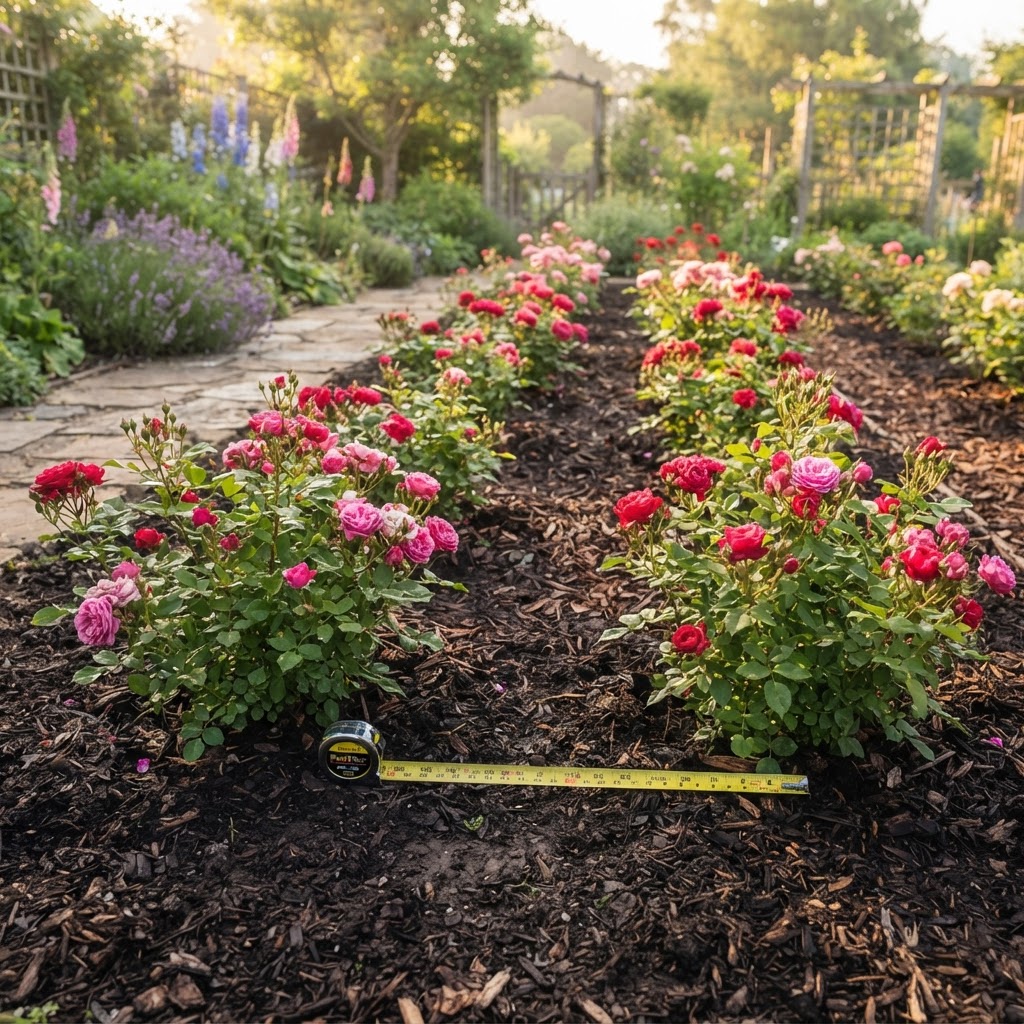
Rose Spacing Guide: How Far Apart to Plant Roses for Healthy, Abundant Blooms
Most roses need 2 to 4 feet between plants, measured from the center of one plant to the center of the next. Miniatures can go as close as 1 to 2 feet. Large shrub roses, old garden roses, and climbers need 4 to 10 feet or more. The right number depends on the mature size of your variety, your climate, and how much airflow your garden gets.
Read the guide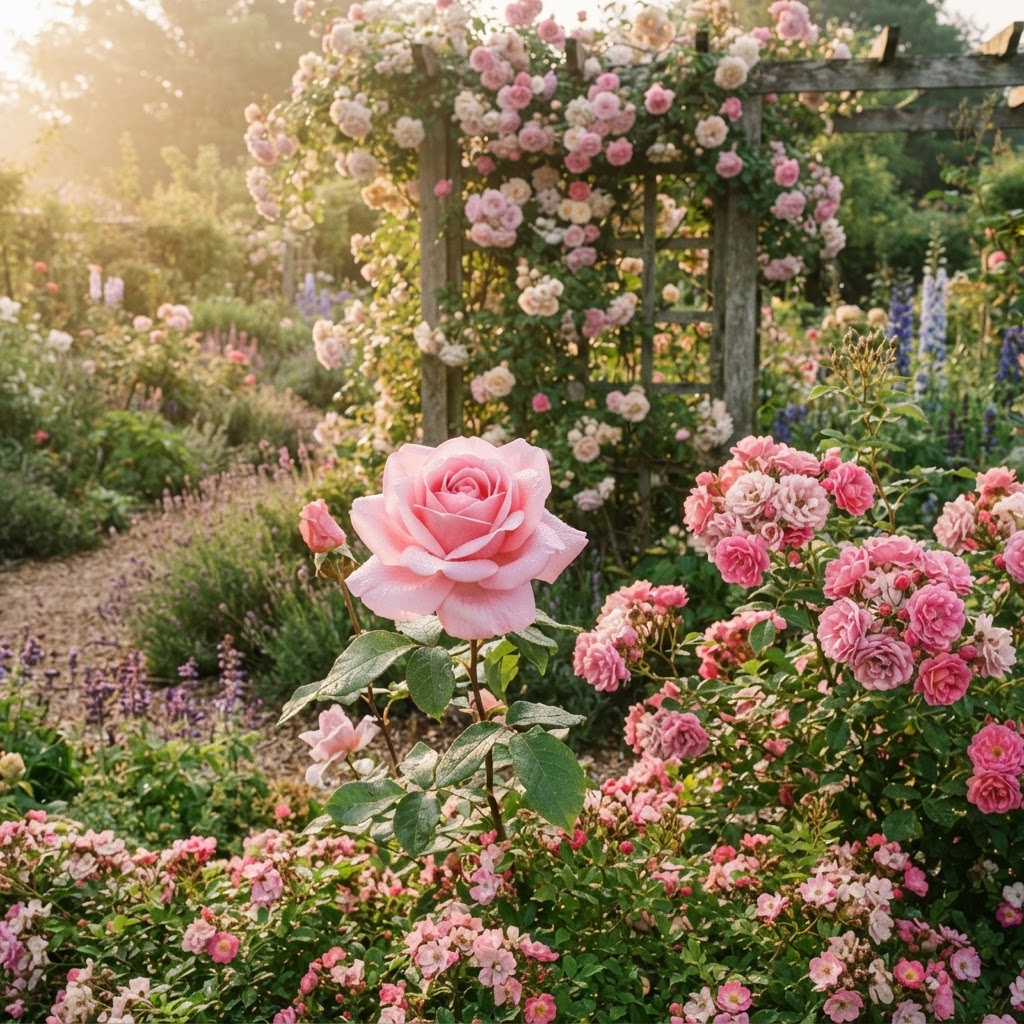
All About Roses: The Complete Guide to Rose Types, Hardiness Zones, Care and Best Varieties
Roses are sorted into three broad groups, species roses, Old Garden Roses (classes before 1867) and Modern Roses, and then into familiar classes such as hybrid tea, floribunda, grandiflora, shrub, climber, rambler, miniature and groundcover. Each type differs in size, bloom pattern, fragrance, hardiness and the care it needs. The right choice starts with your goal (cut flowers, color, fragrance or coverage) and your USDA hardiness zone.
Read the guide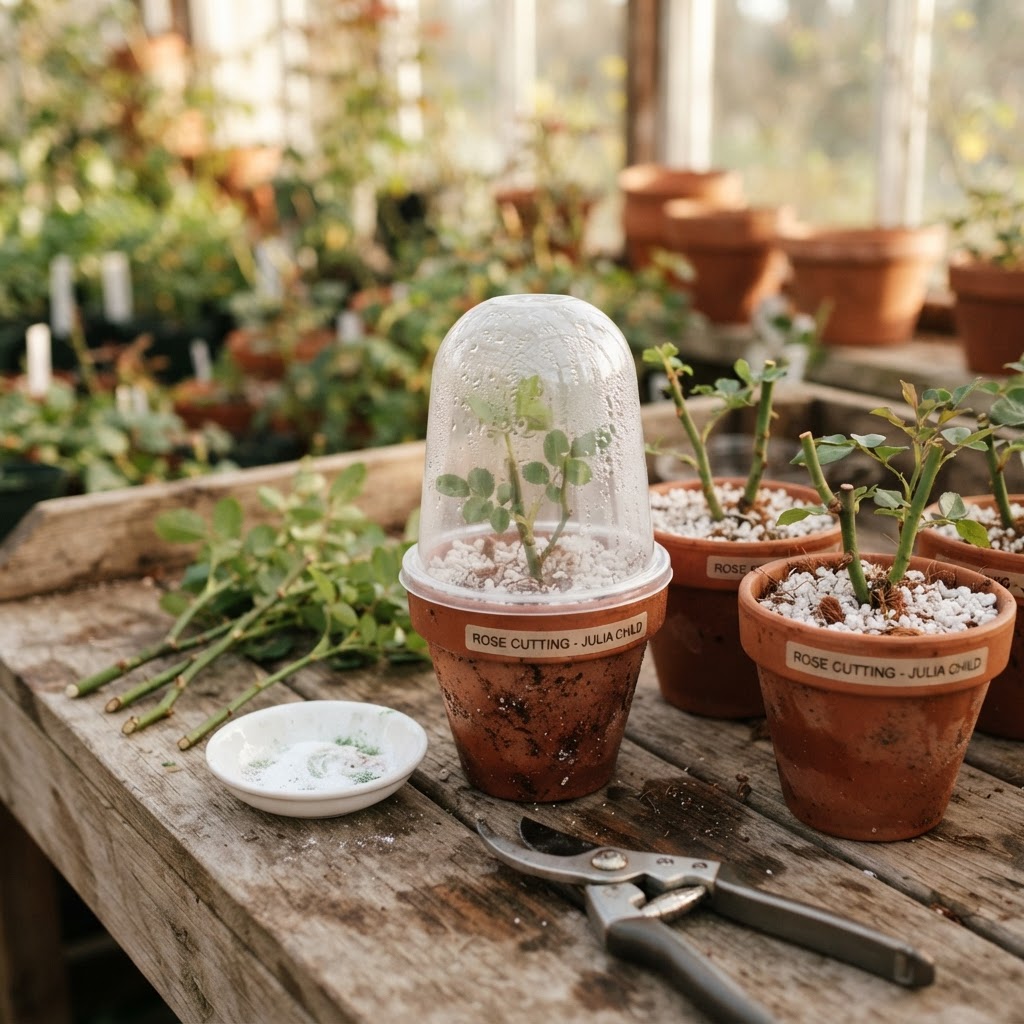
A Step-by-Step Beginner’s Guide to Successfully Propagating Roses from Cuttings
To propagate roses from cuttings, take a healthy 6–8 inch stem, remove the lower leaves, dip the cut end in rooting hormone (optional), and place it in a moist propagation mix such as 50% perlite and 50% coco coir. Keep the cutting humid and in bright indirect light. Most rose cuttings develop roots within 4–8 weeks.
Read the guide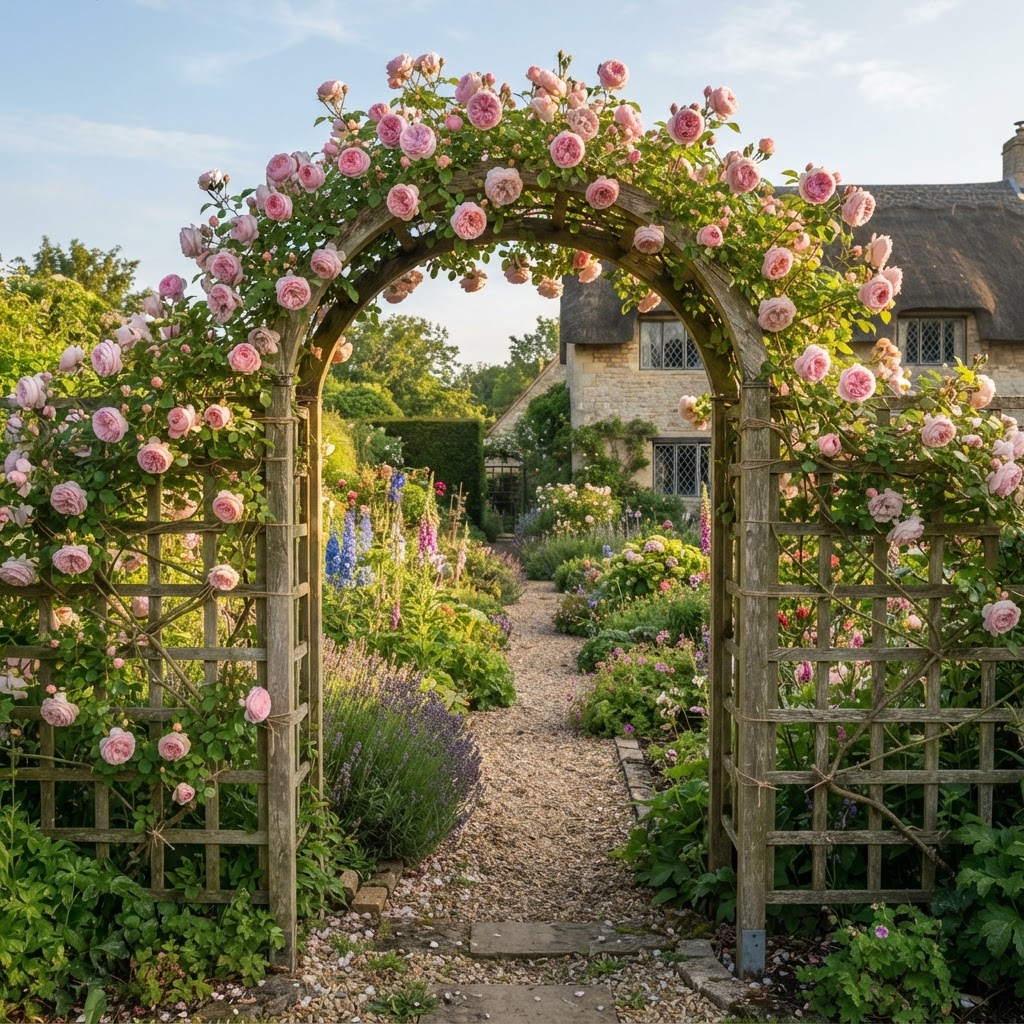
Training Climbing Roses: Creative Ways to Get Fuller, More Beautiful Vines
Climbing roses don’t actually climb — they grow long canes that you have to guide and tie. The secret to a wall of flowers instead of bare stems is the fan method: spread the main canes horizontally and diagonally across the support rather than letting them shoot straight up, because horizontal canes produce flowering shoots along their entire length. Start with a sturdy support, tie young flexible canes loosely into position while you can still bend them, and renew the framework gradually through pruning — the sections below cover trellises, arches, fences, pergolas, walls, and the mistakes to avoid.
Read the guide
How to Choose and Grow Fragrant Roses
A fragrant rose is chosen, not lucked into: pick a variety with a top fragrance rating, match its scent family to the perfume you actually enjoy, plant it where air moves through — beside a path, gate, or sitting spot — and give it full sun and steady water, because fragrance peaks on warm, well-watered growth. The steps below walk you from catalog to planting hole.
Read the guide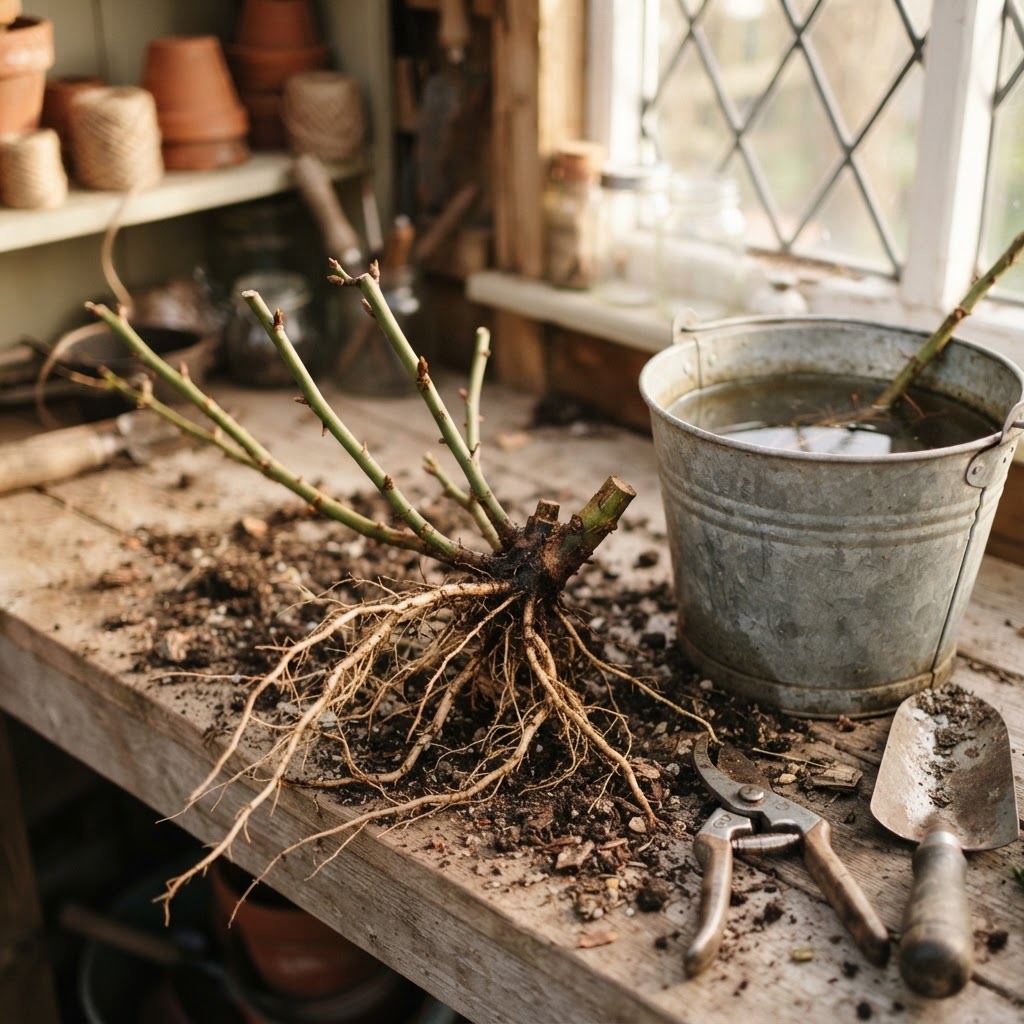
Bare Root Roses: The Complete Beginner's Guide
A bare root rose is a dormant plant dug from the field and shipped without soil — it looks like a bundle of sticks, but it is the cheapest, widest-selection way to buy roses and often establishes faster than a potted plant. Success comes down to four things: soak the roots 8–24 hours before planting, get it in the ground while dormant, keep the soil moist (not swampy) for the first two months, and resist fertilizing until new growth appears. The steps below cover everything from choosing a healthy plant to your first blooms.
Read the guide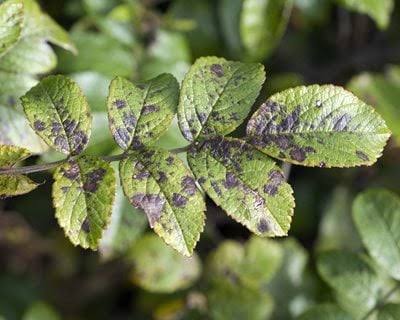
How to Get Rid of Black Spot on Roses
Black spot is a fungal disease that causes circular black spots on rose leaves, followed by yellowing and leaf drop. Treat it by removing every infected leaf, watering only at the base, and applying a fungicide every 7–14 days until new growth comes in clean. Prevent it with full sun, good airflow, and a thorough fall cleanup.
Read the guide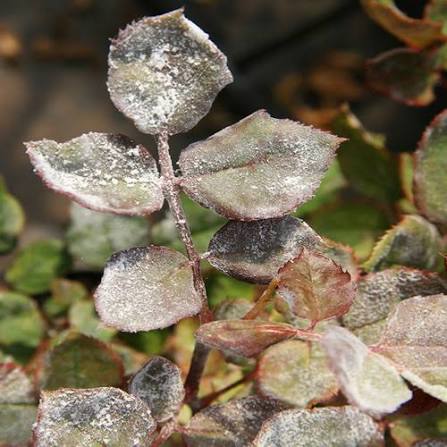
Powdery Mildew on Roses: Treatment & Prevention
Powdery mildew is a fungal disease that coats rose leaves, buds, and new shoots in a white, talc-like powder, often distorting the growth. Treat it by pruning out infected shoots, improving sun and airflow, and spraying with sulfur, potassium bicarbonate, or a systemic fungicide until new growth is clean. Prevent it by avoiding crowded planting and heavy nitrogen feeding.
Read the guide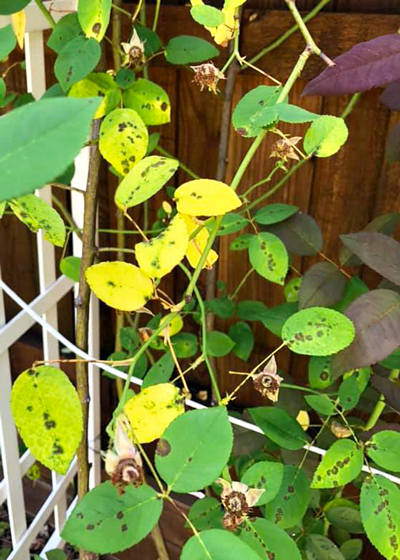
Why Are My Rose Leaves Turning Yellow?
Yellowing leaves are a symptom, not a single disease. The pattern tells the story: yellow with black spots means black spot; yellow between green veins points to chlorosis; evenly yellow, dry leaves mean drought; and scattered yellow lower leaves in late summer can simply be natural aging. Match your pattern below to find the cause and the fix.
Read the guide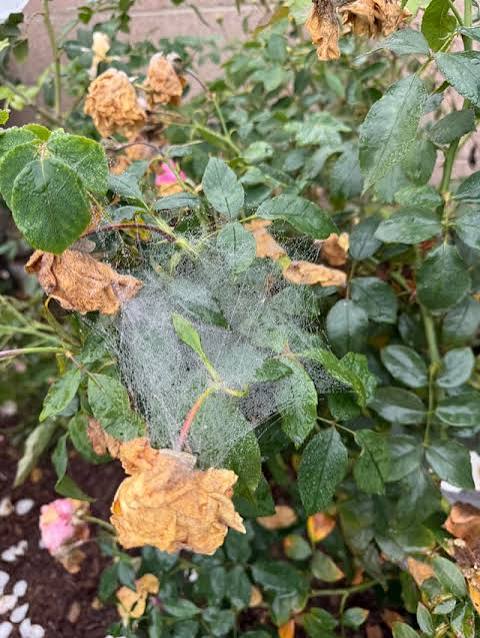
Spider Mites on Roses: Signs, Treatment & Prevention
Spider mites are tiny sap-sucking arachnids that leave rose foliage stippled and bronzed with fine webbing on leaf undersides, and they explode during hot, dry weather. Treat them by blasting leaf undersides with a hard stream of water daily for about a week, following with insecticidal soap or a miticide for heavy infestations. Keep plants hydrated and dust down to prevent them.
Read the guide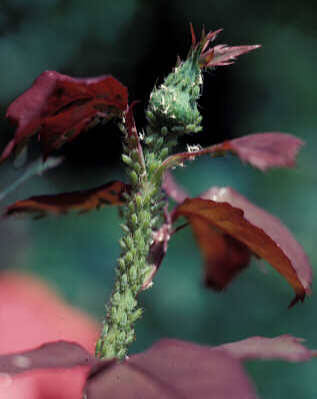
Aphids on Roses: Signs, Treatment & Prevention
Aphids are small, soft-bodied sap-sucking insects that cluster on rose buds and tender new shoots, leaving sticky honeydew, curled growth, and ants in their wake. Treat them with a firm spray of water, insecticidal soap, or by wiping small clusters off by hand — repeat as needed. Prevent outbreaks by holding back on nitrogen-heavy feeding and letting ladybugs and lacewings do the patrol work.
Read the guide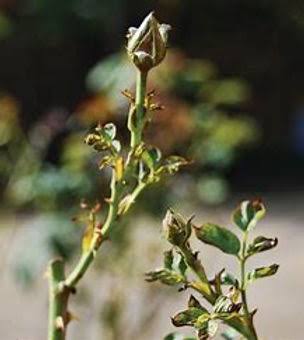
Thrips on Roses: Signs, Treatment & Prevention
Thrips are sliver-thin insects that rasp and feed inside rose blooms, leaving petals with brown, scorched edges and buds that open distorted or stall entirely. Treat them by removing and binning damaged blooms, spraying unopened buds with insecticidal soap or spinosad, and hanging blue sticky traps. Prevent them by cleaning up spent blooms and letting natural predators work.
Read the guide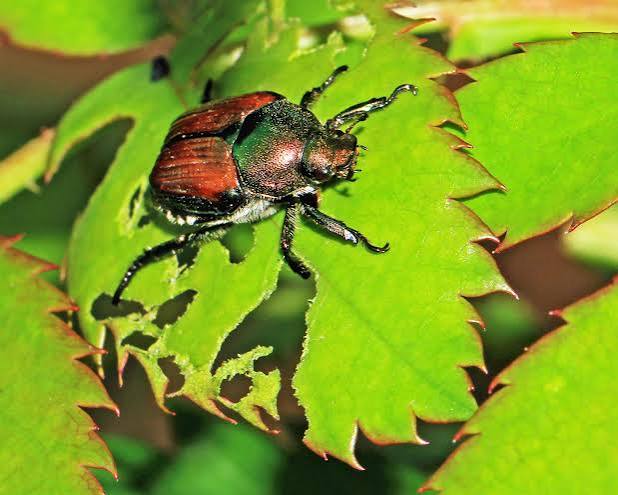
Japanese Beetles on Roses: Control & Prevention
Japanese beetles skeletonize rose foliage and mob blooms from June through August. Control adults by knocking them into soapy water each cool morning, using targeted sprays only for heavy damage, and treating lawns for grubs in late summer to shrink next year’s population. Never use pheromone traps — they lure far more beetles to your garden than they catch.
Read the guide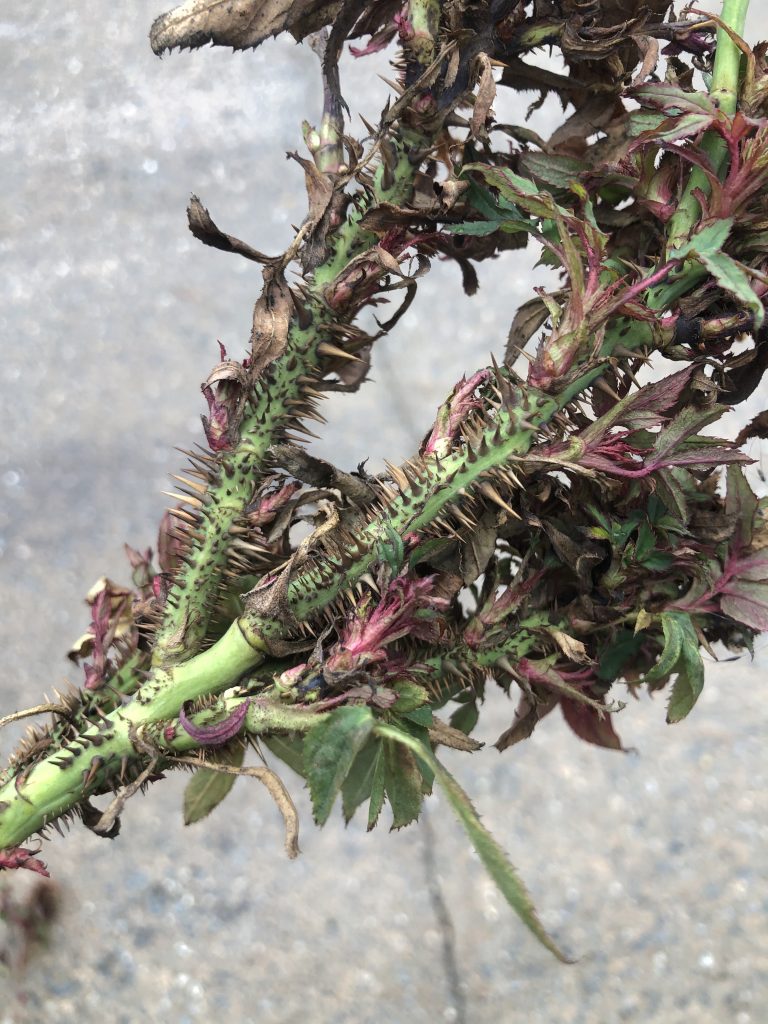
Rose Rosette Disease: Symptoms, Spread & What to Do
Rose rosette disease (RRD) is an incurable virus spread by a microscopic mite, which makes new rose growth thick, red, overly thorny, and distorted — often in witch’s-broom clusters. There is no cure: a diagnosed rose must be removed entirely, roots and all, and destroyed rather than composted, to protect the other roses in your garden, especially shrub roses.
Read the guide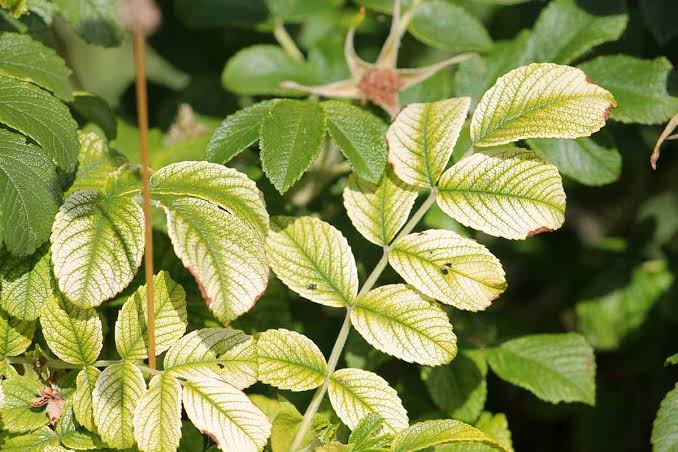
Chlorosis in Roses: Why Leaves Yellow with Green Veins
Leaves that yellow between still-green veins are the classic sign of iron chlorosis — and the cause is almost never a lack of iron in the soil. Alkaline soil pH, soggy or compacted roots, or overwatering locks iron out of the plant. Apply chelated iron for a fast green-up, but fix the real cause: test your soil, correct drainage, and adjust watering.
Read the guide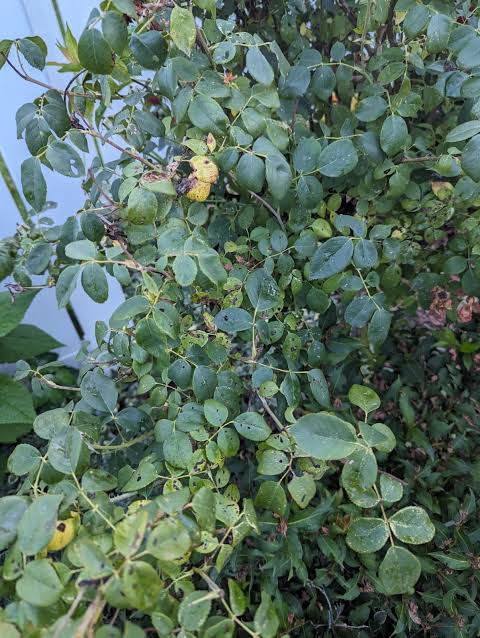
Why Your Rose Isn’t Blooming: 6 Causes & Fixes
Roses that grow plenty of leaves but few or no blooms are usually missing sunlight — most varieties need at least six hours of direct sun — or are getting too much nitrogen, were pruned at the wrong time, or are still too young to flower well. Drought stress, deep planting, and pests eating the buds account for most of the rest. Work through the causes below.
Read the guide