Diseases & Pests
Guides to identifying and treating rose diseases, pests, and the damage they leave behind — with organic and conventional treatment options.
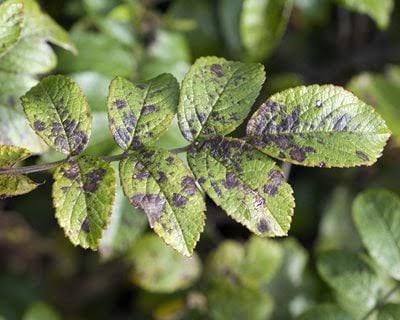
How to Get Rid of Black Spot on Roses
Black spot is a fungal disease that causes circular black spots on rose leaves, followed by yellowing and leaf drop. Treat it by removing every infected leaf, watering only at the base, and applying a fungicide every 7–14 days until new growth comes in clean. Prevent it with full sun, good airflow, and a thorough fall cleanup.
Updated September 4, 2026
Read More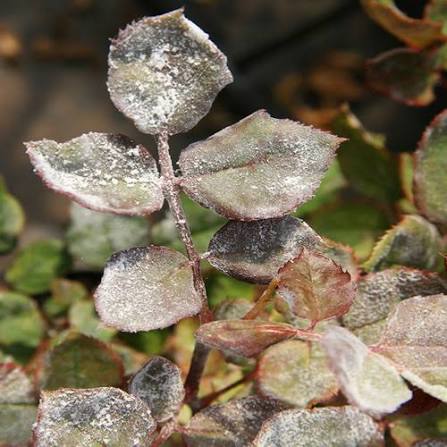
Powdery Mildew on Roses: Treatment & Prevention
Powdery mildew is a fungal disease that coats rose leaves, buds, and new shoots in a white, talc-like powder, often distorting the growth. Treat it by pruning out infected shoots, improving sun and airflow, and spraying with sulfur, potassium bicarbonate, or a systemic fungicide until new growth is clean. Prevent it by avoiding crowded planting and heavy nitrogen feeding.
Updated September 4, 2026
Read More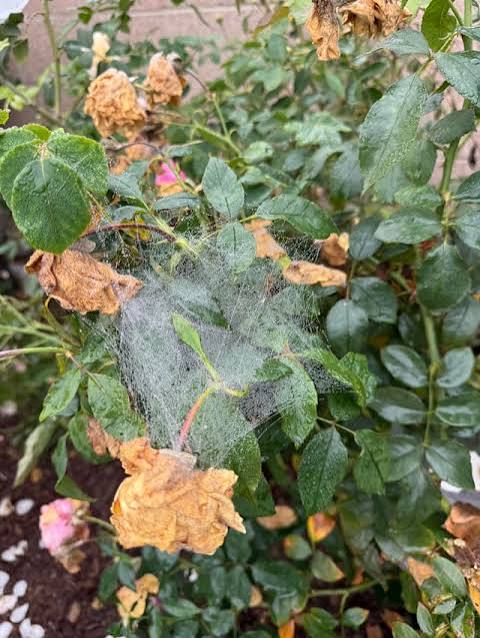
Spider Mites on Roses: Signs, Treatment & Prevention
Spider mites are tiny sap-sucking arachnids that leave rose foliage stippled and bronzed with fine webbing on leaf undersides, and they explode during hot, dry weather. Treat them by blasting leaf undersides with a hard stream of water daily for about a week, following with insecticidal soap or a miticide for heavy infestations. Keep plants hydrated and dust down to prevent them.
Updated September 4, 2026
Read More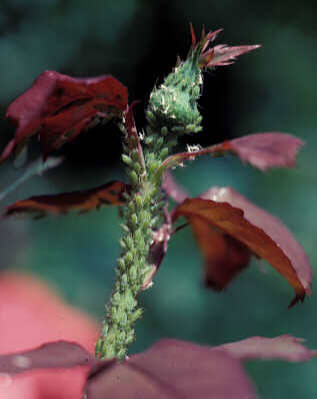
Aphids on Roses: Signs, Treatment & Prevention
Aphids are small, soft-bodied sap-sucking insects that cluster on rose buds and tender new shoots, leaving sticky honeydew, curled growth, and ants in their wake. Treat them with a firm spray of water, insecticidal soap, or by wiping small clusters off by hand — repeat as needed. Prevent outbreaks by holding back on nitrogen-heavy feeding and letting ladybugs and lacewings do the patrol work.
Updated September 4, 2026
Read More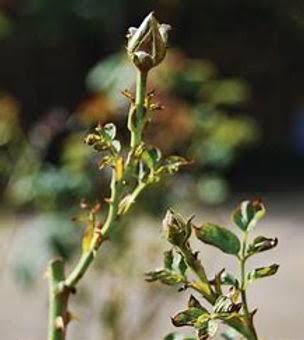
Thrips on Roses: Signs, Treatment & Prevention
Thrips are sliver-thin insects that rasp and feed inside rose blooms, leaving petals with brown, scorched edges and buds that open distorted or stall entirely. Treat them by removing and binning damaged blooms, spraying unopened buds with insecticidal soap or spinosad, and hanging blue sticky traps. Prevent them by cleaning up spent blooms and letting natural predators work.
Updated September 4, 2026
Read More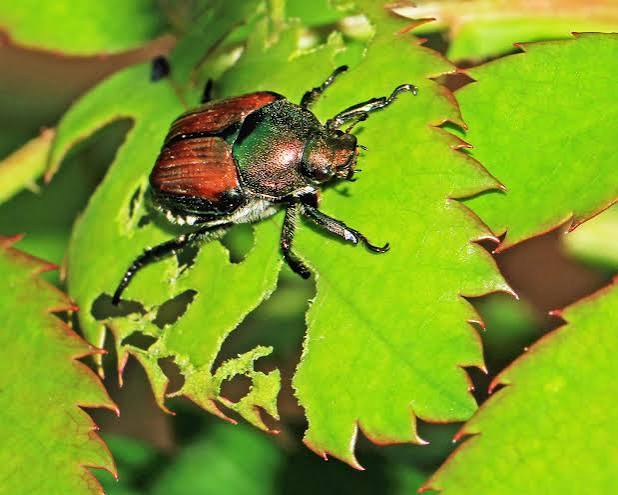
Japanese Beetles on Roses: Control & Prevention
Japanese beetles skeletonize rose foliage and mob blooms from June through August. Control adults by knocking them into soapy water each cool morning, using targeted sprays only for heavy damage, and treating lawns for grubs in late summer to shrink next year’s population. Never use pheromone traps — they lure far more beetles to your garden than they catch.
Updated September 4, 2026
Read More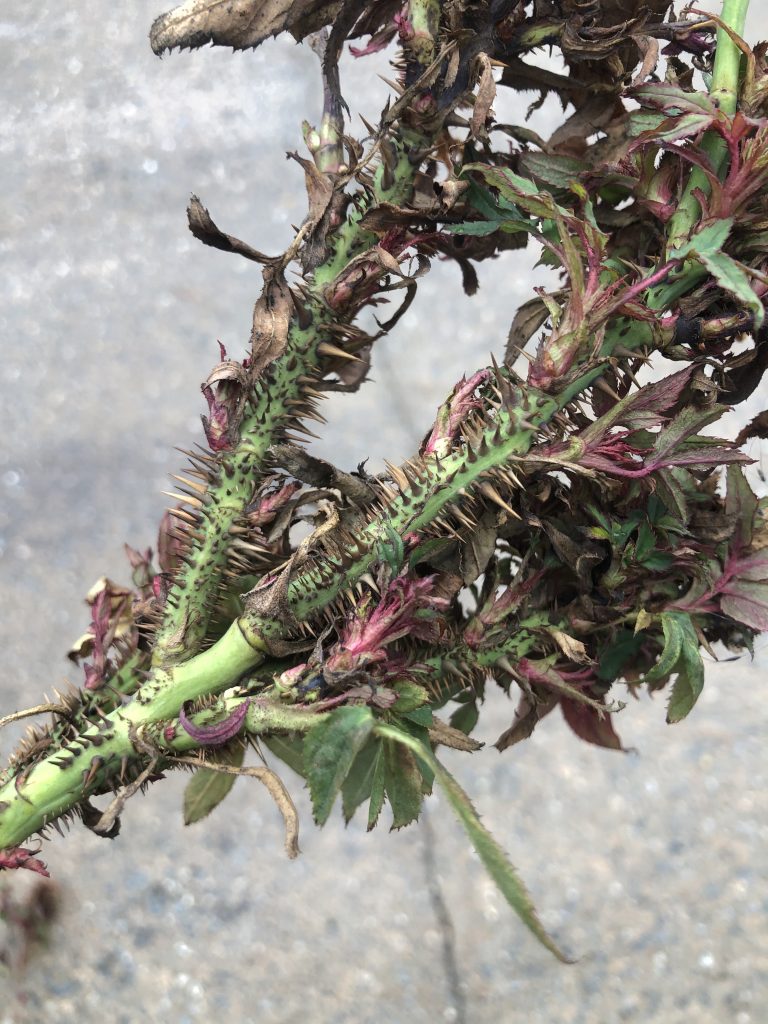
Rose Rosette Disease: Symptoms, Spread & What to Do
Rose rosette disease (RRD) is an incurable virus spread by a microscopic mite, which makes new rose growth thick, red, overly thorny, and distorted — often in witch’s-broom clusters. There is no cure: a diagnosed rose must be removed entirely, roots and all, and destroyed rather than composted, to protect the other roses in your garden, especially shrub roses.
Updated September 4, 2026
Read More