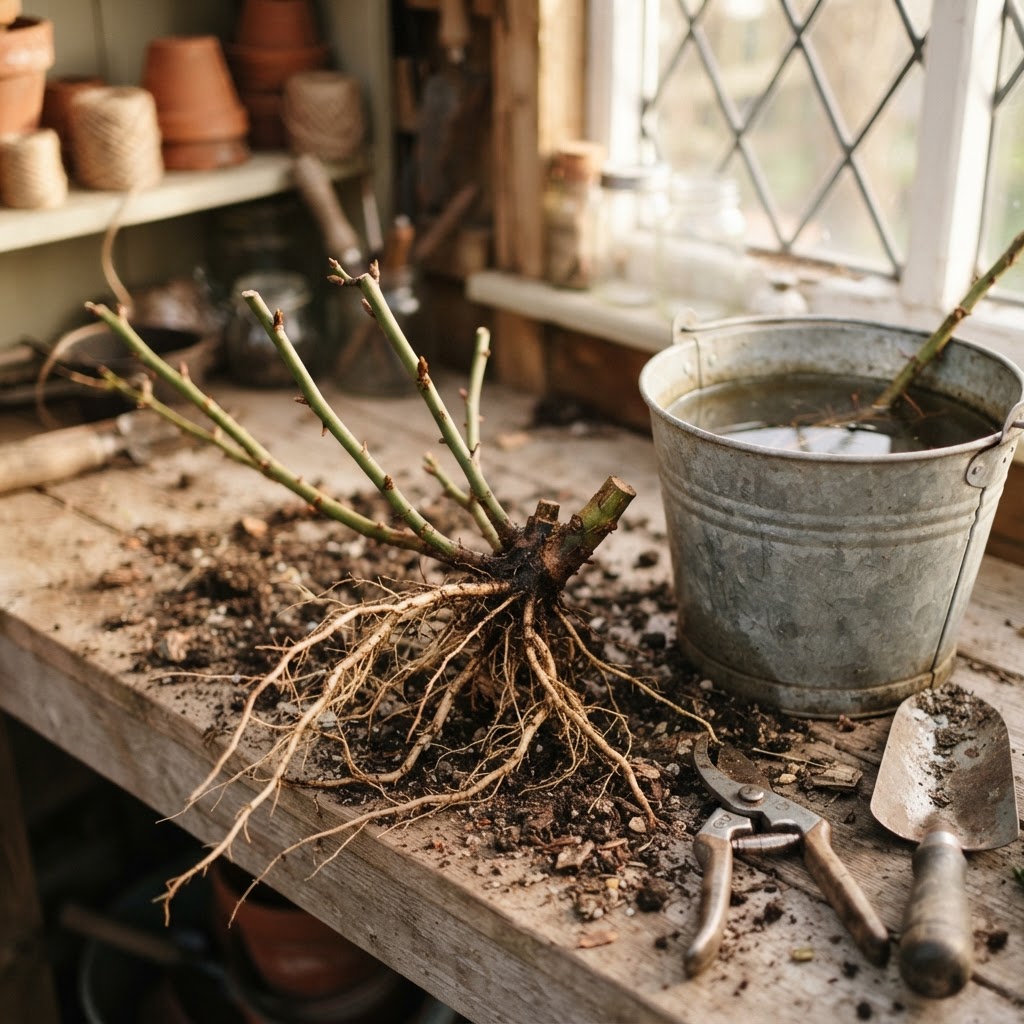
What is a bare root rose?
A bare root rose is exactly what it sounds like: a dormant rose sold without soil around its roots. Instead of growing in a container, the rose is dug from the field during dormancy, cleaned, trimmed, and shipped with its roots exposed.
Don’t panic when you first see one. A bare root rose often looks like a bundle of sticks with roots attached. It may not look impressive, but that little bundle can become a spectacular rose bush within a single growing season.
Why do nurseries sell roses bare root?
Because it is one of the most efficient ways to grow and ship roses. Without heavy pots and soil, shipping costs drop, plants are easier to handle, nurseries can offer far more varieties, and roses establish quickly when planted at the right time. Many of the world’s best rose growers sell the majority of their roses as bare root plants.
Are bare root roses better than potted roses?
Neither is universally better — they trade convenience for value. Bare root roses are usually cheaper, offer wider variety selection (especially for collectors), ship easily, and let you inspect the roots before planting. Potted roses can go in the ground most of the year, often arrive blooming, and give instant garden impact. If you are building a serious collection, bare root usually provides the best value.
- Bare root: less expensive, more varieties, easy to ship, easy to inspect roots — but a limited planting season and a less impressive look on arrival
- Potted: plant almost any time, instant blooms, easier for beginners to visualize — but pricier, heavier, fewer specialty varieties, and sometimes root-bound
When should you plant bare root roses?
The best time is while the rose is dormant — the window depends on your climate. Planting in dormancy lets the rose wake up in your soil and root out before it has to support top growth.
- Cold winter climates (zones 4–7): late winter through early spring, once the ground can be worked
- Moderate climates (zones 8–9): December through February
- Warm winter climates (zones 9–10): December through January, before spring growth begins — in California, January is prime bare root season
How do you choose a healthy bare root rose?
A bare root rose should look dormant, not dead. Before buying, inspect for firm, healthy wood and roots — and buy from a reputable nursery, since good handling before shipping matters as much as the plant itself.
- Look for at least 2–3 healthy canes, firm and green under the surface
- Check for a healthy, well-developed root system
- Pass on plants with mushy roots, blackened canes, excessive shriveling, mold, or any sign of rot or disease
What should you do before planting?
Preparation matters more with bare root roses than with any other planting method. Two steps: rehydrate the roots, and pick a spot with the sun and drainage roses demand.
- Soak the roots in a bucket of water for 8–24 hours before planting to rehydrate the plant after shipping (plain water works — some gardeners add liquid seaweed, fish emulsion, or compost tea)
- Choose a location with 6–8 hours of sun, good air circulation, well-draining soil, and access to regular watering — morning sun is especially valuable because it helps leaves dry quickly
How do you prepare the planting hole?
Dig a hole about 18–24 inches wide and 12–18 inches deep — the exact size depends on the root system. You want roots to spread naturally without bending or circling.
For heavy clay soil, mix in compost, aged manure, or leaf mold — compost is your best friend. Avoid filling the hole with only premium potting soil: roots need to transition into the surrounding native soil, and a rich pocket can keep them circling instead of growing outward.
How do you plant a bare root rose?
Planting takes minutes once the hole is ready. The one detail worth extra care is the bud union — the knobby graft where the variety meets the rootstock — which sits at different depths depending on your climate.
- 1
Create a small mound of soil in the center of the hole.
- 2
Spread the roots over the mound — think of an upside-down octopus, with roots extending outward naturally.
- 3
Position the bud union correctly: slightly below soil level in cold climates, at or slightly above soil level in warm climates.
- 4
Backfill gently with soil and firm it lightly to eliminate large air pockets.
- 5
Water deeply — a thorough soaking, not a sprinkle.
Should you fertilize and water right away?
Skip fertilizer at planting — the rose’s first priority is growing roots, and feeding now pushes top growth the roots cannot support. Wait until you see healthy new growth, then feed with an organic option like Dr. Earth Rose & Flower, Espoma Rose-tone, or Down To Earth Rose & Flower Mix — or simply top-dress with compost and worm castings.
- Weeks 1–2 after planting: check soil moisture frequently
- Weeks 3–8: deep watering as needed
- After establishment: water deeply and less often
- The goal is moist soil, not swamp conditions
Should you mulch a newly planted rose?
Yes — mulch retains moisture, moderates soil temperatures, reduces weeds, and improves soil health. Apply 2–4 inches and keep it a few inches away from the canes so the wood stays dry.
- Compost, arbor mulch, shredded leaves, or aged horse manure all work well
What are the most common bare root mistakes?
Most bare root failures come from a handful of fixable mistakes — and one non-mistake that panics beginners: many bare root roses sit quietly for weeks before showing growth. Patience is part of rose gardening.
- Planting too deep — slows growth and causes problems
- Letting roots dry out — even a few hours of drying stresses the plant
- Overfertilizing — more fertilizer does not equal more flowers
- Watering every day forever — new roses need consistent moisture, not permanent puddles
When should you NOT plant bare root roses?
Bare root roses are not always the best choice. If any of these apply, wait — or buy a healthy potted rose instead, especially in late spring and summer.
- The ground is frozen — roots cannot establish properly
- Extreme heat (95°F+) is coming — planting into a heat wave creates unnecessary stress
- You cannot water regularly during establishment
- You are leaving on vacation — plant when you can monitor them
- It is late spring or summer — a potted rose is usually the better option then
How long until a bare root rose blooms?
Many bare root roses produce flowers their first season, some within a few months of planting. The biggest flush usually comes in the second year as the plant matures — today’s bundle of sticks is next year’s showstopper.
And if you are anything like most rose collectors, planting one bare root rose somehow turns into ordering five more. Consider yourself warned.
Common questions
Related guides
How to Choose and Grow Fragrant Roses
A fragrant rose is chosen, not lucked into: pick a variety with a top fragrance rating, match its scent family to the perfume you actually enjoy, plant it where air moves through — beside a path, gate, or sitting spot — and give it full sun and steady water, because fragrance peaks on warm, well-watered growth. The steps below walk you from catalog to planting hole.
Read the guide Care & DiagnosisWhy Your Rose Isn’t Blooming: 6 Causes & Fixes
Roses that grow plenty of leaves but few or no blooms are usually missing sunlight — most varieties need at least six hours of direct sun — or are getting too much nitrogen, were pruned at the wrong time, or are still too young to flower well. Drought stress, deep planting, and pests eating the buds account for most of the rest. Work through the causes below.
Read the guide Care & Diagnosis8 Simple Things to Do Now to Prepare Your Roses for Fall
Fall rose care is less about doing more and more about doing the right things: ease up on fertilizer so the plant stops pushing tender growth, clean up fallen and diseased leaves, refresh the mulch, keep deep watering during dry spells, skip the heavy pruning, let some hips form, feed the soil, and start planning next year’s wish list. A little attention now means healthier plants, fewer disease problems, and a spectacular spring flush next year.
Read the guide Care & DiagnosisWinter Rose Protection for Zones 6 & 7
Most hardy shrub roses in zones 6 and 7 need nothing more than a late-fall mound of mulch over the crown — 10 to 12 inches of compost, shredded leaves, or bark applied after the ground has begun to freeze. Grafted hybrid teas, floribundas, first-year plants, and marginally hardy varieties benefit from a bit more: fall cleanup, canes tied against wind, and for containers and tree roses, actual shelter. Everything else — rose cones, burlap, burying — is optional for the roses on our zone 6 and zone 7 lists.
Read the guideKeep this guide in your pocket
PetalPals journals every rose you grow, reminds you when to spray and feed, and helps you identify problems from a single photo — free to join.