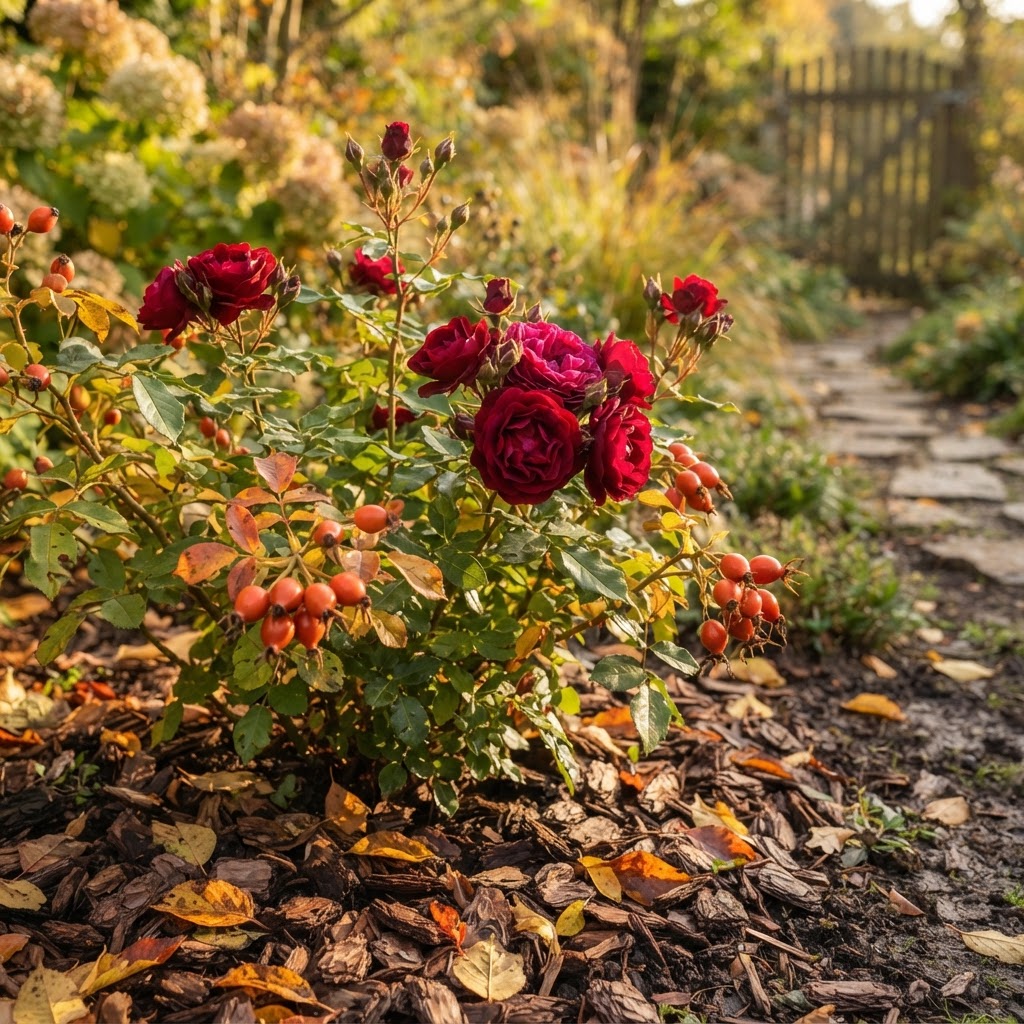
1. Ease up on the fertilizer
Fall is not the time to push lots of tender new growth. In colder climates, stop high-nitrogen fertilizers 6 to 8 weeks before your first frost. In mild winter areas like California zones 9 and 10, you can often continue feeding lightly into early fall, then taper off as temperatures cool.
Think of it as serving your roses a light dinner instead of an all-you-can-eat buffet.
- Organic options: Dr. Earth Rose & Flower Fertilizer or Espoma Rose-tone
- DIY option: top dress with finished compost and let nature do the work
2. Clean up fallen leaves
Black spot, rust, and powdery mildew love to spend winter hiding in old leaves. Remove fallen leaves, diseased foliage, and any debris around the base of the plant — your future self will thank you next spring.
If the leaves are diseased, don’t compost them unless your compost pile gets very hot. Bagging them or sending them to municipal green waste breaks the disease cycle instead of preserving it.
3. Refresh the mulch
A fresh layer of mulch helps regulate soil temperature, retain moisture, and slowly improve soil health. Great choices include compost, aged horse manure, arbor mulch, and shredded leaves.
Apply 2 to 4 inches, but keep mulch a few inches away from the canes. Mulch should be a cozy blanket, not a sleeping bag wrapped around the stems.
4. Water deeply, but less often
Many gardeners stop watering too early. Roses still need moisture while actively growing. Continue deep watering during dry periods, especially in warmer zones, and reduce watering only as rains arrive and plants slow down.
A good rule: stick your finger a few inches into the soil. If it’s dry, it’s time to water.
5. Stop heavy pruning
This surprises a lot of gardeners: fall is generally not the time for major pruning. Remove dead, damaged, or diseased canes, but save hard pruning for winter or early spring — heavy fall pruning can encourage tender growth that may be damaged by cold weather.
- For climbing roses: tie loose canes securely
- Remove obviously damaged growth
- Save major shaping for later
6. Let some rose hips form
Those bright orange or red seed pods aren’t just pretty. Allowing hips to develop signals many roses to slow down and prepare for dormancy, and birds appreciate them as a winter food source.
In colder climates, stop deadheading earlier. In mild California gardens, many gardeners continue deadheading longer if they want more blooms. There is no wrong answer here — more blooms or more hips. It’s the rose equivalent of dessert versus sleep.
7. Feed the soil
Healthy soil grows healthy roses, and fall is a great time to improve the soil around your plants. A simple DIY soil booster: 2 parts compost, 1 part aged manure, and a handful of alfalfa pellets, spread around the drip line and lightly scratched into the surface.
No need to dig deep — let worms handle the heavy lifting.
- Dr. Earth Home Grown Compost
- EB Stone Soil Building Conditioner
- Kellogg Amend
8. Make a wish list for new roses
Fall is when many collectors start planning next year’s garden. Bare-root rose season arrives sooner than you think.
And let’s be honest: every rose collector already has a wish list. Fall is just when we pretend we’re being practical.
- Take photos
- Label mystery roses
- Make notes on your best performers
- Decide which varieties earned a permanent spot — and which might be headed for “shovel pruning”
Zone-by-zone fall rose tips
Fall tasks shift with your climate. Here’s how the basics translate across USDA hardiness zones — the closer you are to the warm end, the more of the season you still have to enjoy.
- Zones 3–5: Stop fertilizing early, stop deadheading and let hips form, protect graft unions before winter, and mulch heavily after the ground cools.
- Zones 6–8: Reduce feeding in early fall, clean up diseased foliage, keep pruning light, and add mulch before winter arrives.
- Zones 9–10 (California, Arizona, Gulf Coast): Continue watering during dry weather, light feeding may continue into early fall, major pruning usually waits until winter — and fall is often one of the best bloom seasons of the year.
The goal of fall rose care
The goal isn’t to make your roses look perfect before winter. The goal is to help them slow down, rest, and come back stronger next season.
A few simple tasks now can mean bigger blooms, healthier plants, and fewer headaches later. And that leaves more time for the important part: admiring roses and convincing yourself you definitely have room for just one more.
Common questions
Related guides
Winter Rose Protection for Zones 6 & 7
Most hardy shrub roses in zones 6 and 7 need nothing more than a late-fall mound of mulch over the crown — 10 to 12 inches of compost, shredded leaves, or bark applied after the ground has begun to freeze. Grafted hybrid teas, floribundas, first-year plants, and marginally hardy varieties benefit from a bit more: fall cleanup, canes tied against wind, and for containers and tree roses, actual shelter. Everything else — rose cones, burlap, burying — is optional for the roses on our zone 6 and zone 7 lists.
Read the guide Care & DiagnosisZone 9 & 10 Rose Care Calendar
In zones 9 and 10 the rose year is organized around the late-winter reset: hard prune and clean-up in January–February, a feeding program that starts with the first growth flush, deliberate heat management through July and August, and — the reward of warm-climate growing — a second spring in fall, when the best blooms of the year open in October and November. The calendar below walks the full year.
Read the guide DiseaseHow to Get Rid of Black Spot on Roses
Black spot is a fungal disease that causes circular black spots on rose leaves, followed by yellowing and leaf drop. Treat it by removing every infected leaf, watering only at the base, and applying a fungicide every 7–14 days until new growth comes in clean. Prevent it with full sun, good airflow, and a thorough fall cleanup.
Read the guideKeep this guide in your pocket
PetalPals journals every rose you grow, reminds you when to spray and feed, and helps you identify problems from a single photo — free to join.