

Sally Holmes
Robert Holmes, 1976 · Zones 6–11 · Ivory white · Light musk fragrance
The greatest landscape rose of the last fifty years — huge trusses of single ivory blooms that cover the plant in a white wave every few weeks, nearly nonstop in frost-free gardens. Makes a magnificent mounded shrub or short climber.
View Sally Holmes in the PetalPals catalog
Iceberg
Kordes, 1958 · Zones 5–9 · White · Light honey-musk fragrance
In zone 10 the world’s favorite floribunda barely pauses at all — crisp white clusters wave after wave, twelve months near enough. Coastal fog can bring powdery mildew, so plant it where morning sun dries the leaves early.
View Iceberg in the PetalPals catalog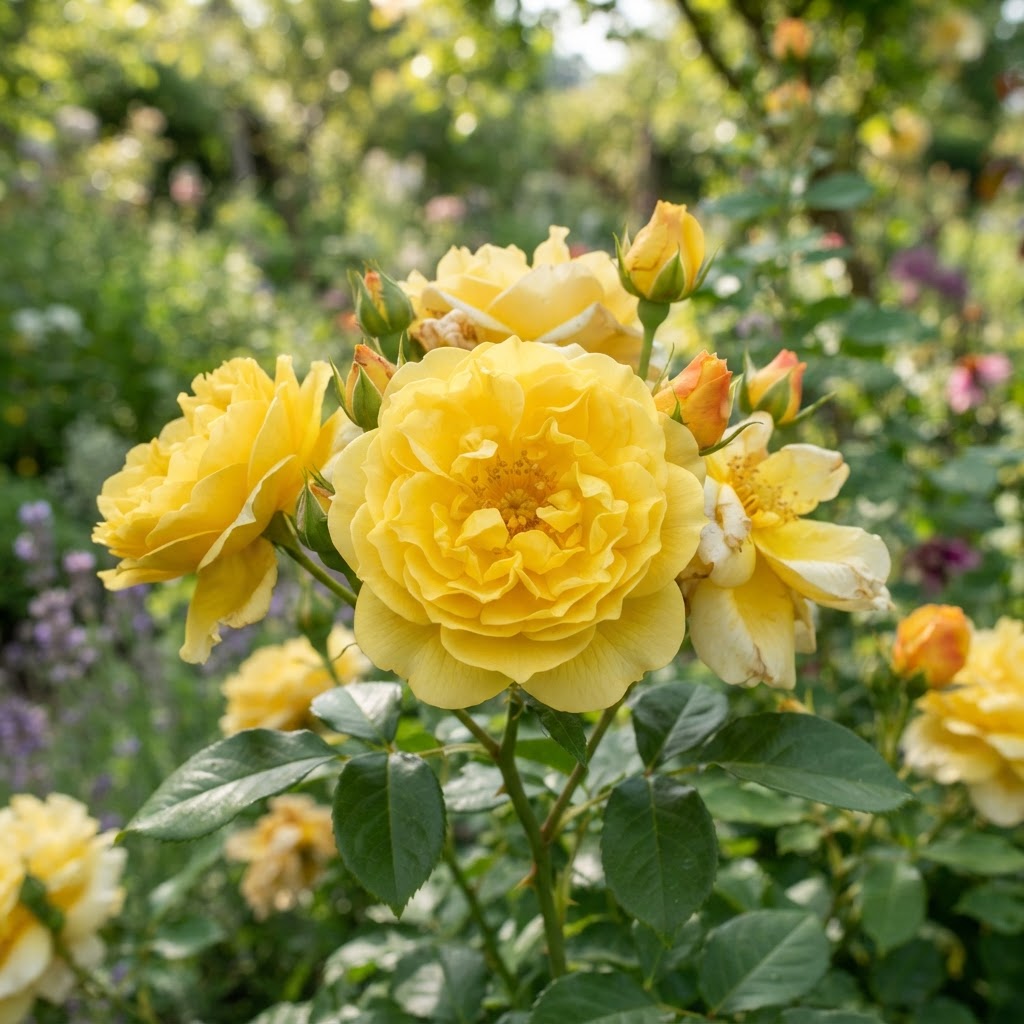
Julia Child
Tom Carruth (Weeks), 2006 · Zones 5–9 · Butter gold · Strong licorice-spice fragrance
A Southern California rose through and through — butter-gold, cupped blooms with a big licorice perfume, on a compact plant bred by Weeks for exactly this climate. Blooms in nearly continuous cycles in zone 10.
View Julia Child in the PetalPals catalog
Double Delight
Swim & Weeks, 1977 · Zones 5–9 · Cream with crimson edges · Strong spicy-sweet fragrance
Bred in Southern California and never happier than in zone 10 sun — the cream-and-ruby coloring grows more vivid with heat, and the spicy perfume is legendary. Give it steady water and it blooms all year.
View Double Delight in the PetalPals catalog
Graham Thomas
David Austin, 1983 · Zones 5–9 · Rich pure yellow · Strong tea fragrance
In warm-winter gardens this famous yellow English rose grows big and generous — plant it as a large shrub or train it as an eight-foot climber against a wall. Cupped butter-yellow blooms repeat in cycles all year.
View Graham Thomas in the PetalPals catalog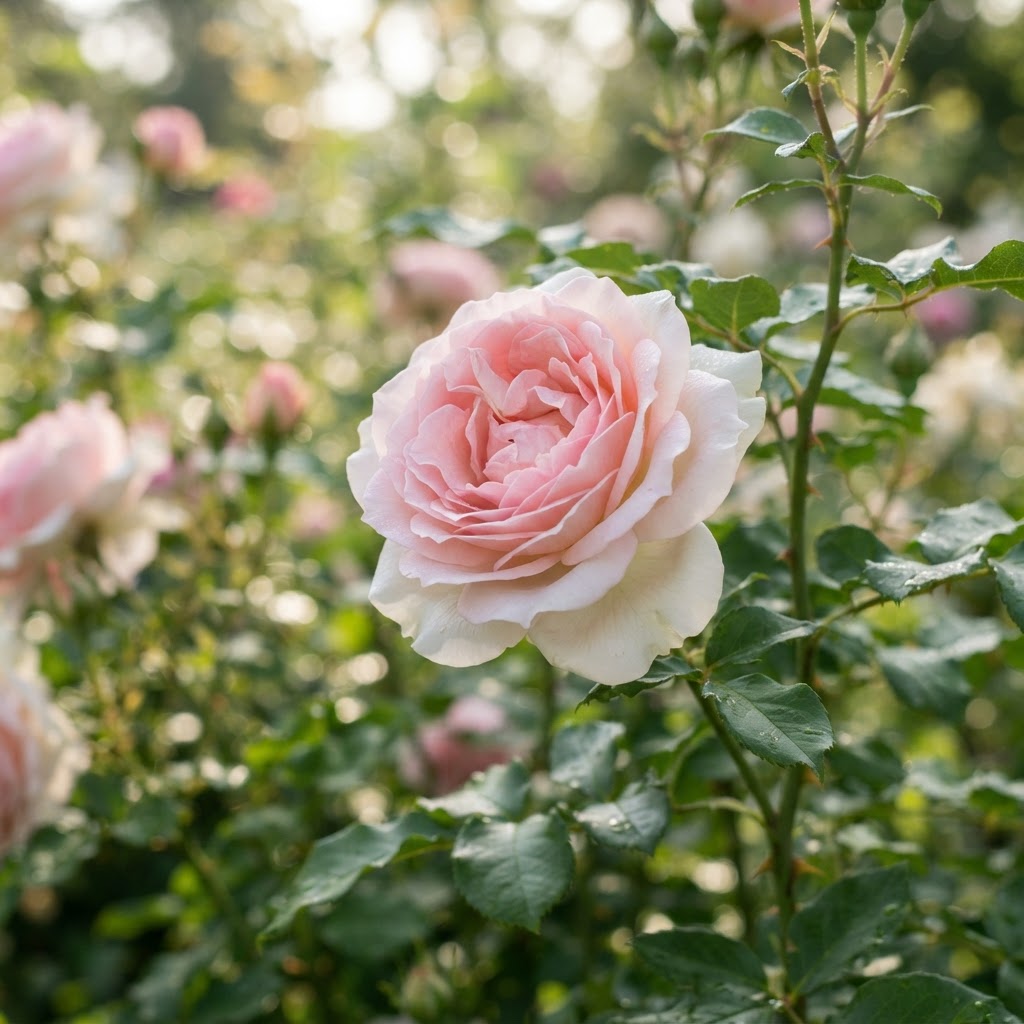
Francis Meilland
Meilland, 2008 · Zones 6–10 · Soft pearly pink · Strong citrus-rose fragrance
Perfectly formed silvery-pink blooms with a rich anise-citrus scent — among the healthiest large-flowered roses ever bred. In dry zone 10 climates it produces exhibition-quality flowers nearly year-round.
View Francis Meilland in the PetalPals catalog
Buff Beauty
Bentall, 1939 · Zones 5–10 · Apricot buff · Moderate musk-tea fragrance
The classic hybrid musk — soft apricot-buff blooms in graceful clusters arching over the border, repeating continuously in mild climates. Nearly thornless, superbly healthy, and tolerant of light shade.
View Buff Beauty in the PetalPals catalog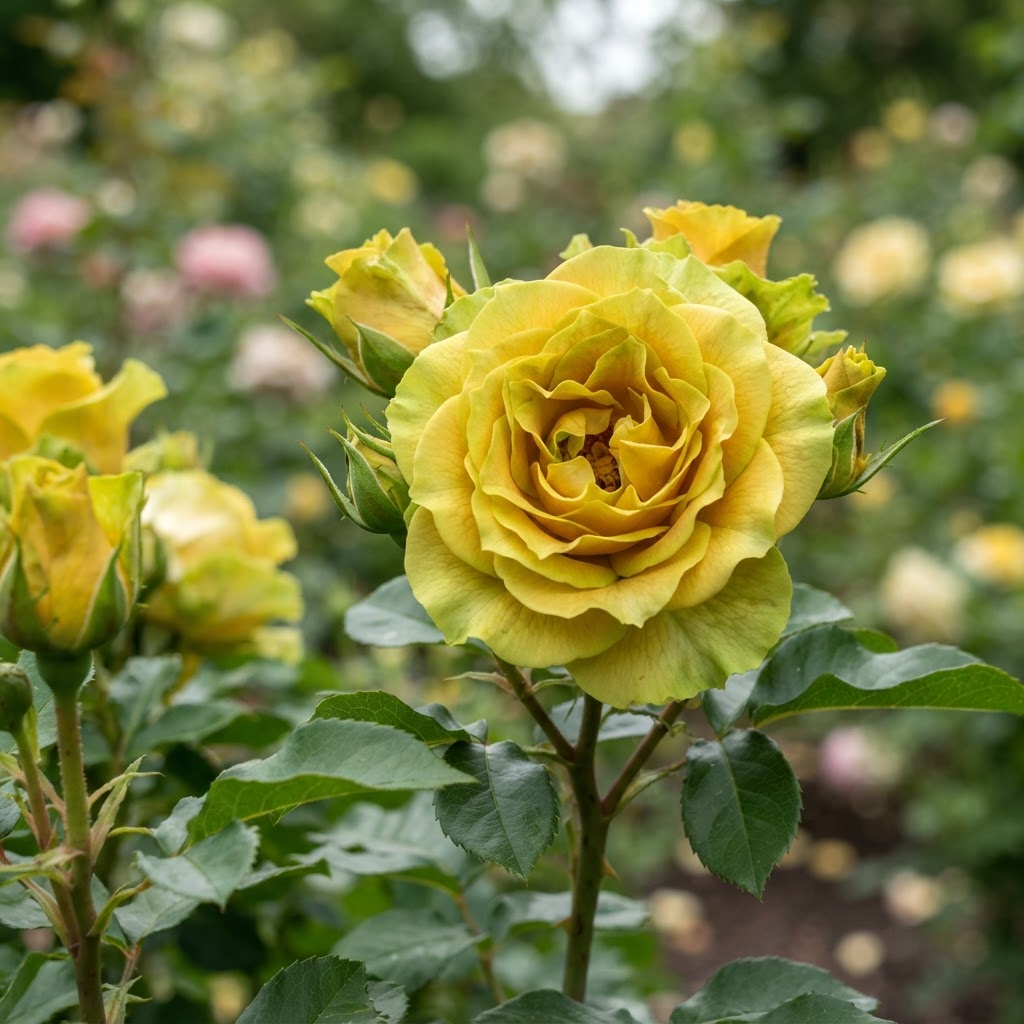
St. Patrick
Tom Carruth (Weeks), 1996 · Zones 6–10 · Gold with green shading · Slight tea fragrance
A heat-loving hybrid tea whose golden blooms take on distinctive green shading in hot weather — a feature, not a flaw, and one of the few yellows that blooms beautifully straight through a zone 10 summer.
View St. Patrick in the PetalPals catalog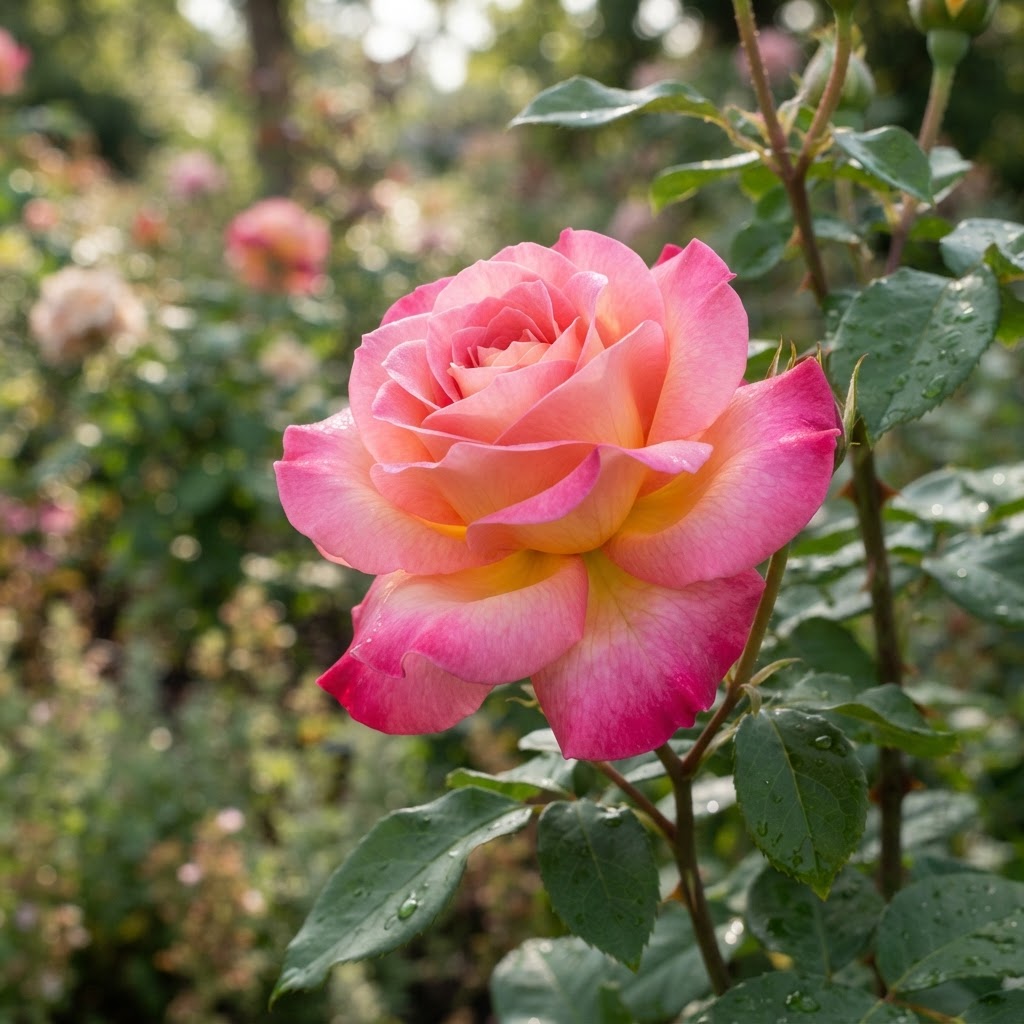
Tiffany
Robert Lindquist, 1954 · Zones 6–10 · Pink with cream center · Strong fruit-rose fragrance
A California-bred classic whose pink blooms with glowing cream centers hold their color even in full sun — and it carries a rich fruity perfume. Happiest exactly where it was bred, in zone 10 warmth.
View Tiffany in the PetalPals catalog
Mister Lincoln
Swim & Weeks, 1964 · Zones 5–9 · Deep velvet red · Strong damask fragrance
In dry-winter zone 10 gardens the great fragrant red keeps producing cutting stems almost every month of the year. Watch for spider mites in the driest months — a strong water spray on the foliage now and then handles them.
View Mister Lincoln in the PetalPals catalogCommon questions
Related guides
Zone 9 & 10 Rose Care Calendar
In zones 9 and 10 the rose year is organized around the late-winter reset: hard prune and clean-up in January–February, a feeding program that starts with the first growth flush, deliberate heat management through July and August, and — the reward of warm-climate growing — a second spring in fall, when the best blooms of the year open in October and November. The calendar below walks the full year.
Read the guide Care & DiagnosisDo Roses Need Chill Hours to Bloom?
Most roses do not need winter chill to bloom. Modern repeat-blooming roses — hybrid teas, floribundas, shrub roses, and nearly every rose sold at a garden center — flower on new growth, so mild winters simply mean more growth and more flowers. The exceptions are once-blooming old garden roses, ramblers, and some species roses, which need a seasonal rest to set their single big spring show and grow disappointingly in frost-free climates.
Read the guide Top 10 ListsBest Roses for Zone 9
For zone 9’s long, hot summers, the most reliable roses are the heat-proof antiques and rugged modern shrubs: Mutabilis, Old Blush, Louis Philippe, Belinda’s Dream, and Perle d’Or lead the list. These are varieties that bloom straight through 95°F days that shut down most modern roses, and none of them need spraying to hold healthy foliage.
Read the guide Top 10 ListsBest Roses for Zone 11
In zone 11’s tropical and near-tropical gardens — South Florida, the Gulf Coast, Hawaii — the proven roses are the heat- and humidity-proof ones: Louis Philippe, Mutabilis, Old Blush, Belinda’s Dream, and Ducher lead the list. Roses here never go dormant and bloom year-round, so the picks favor varieties that flower continuously and handle relentless warmth without spraying.
Read the guideKeep this guide in your pocket
PetalPals journals every rose you grow, reminds you when to spray and feed, and helps you identify problems from a single photo — free to join.